
Industrial Flooring
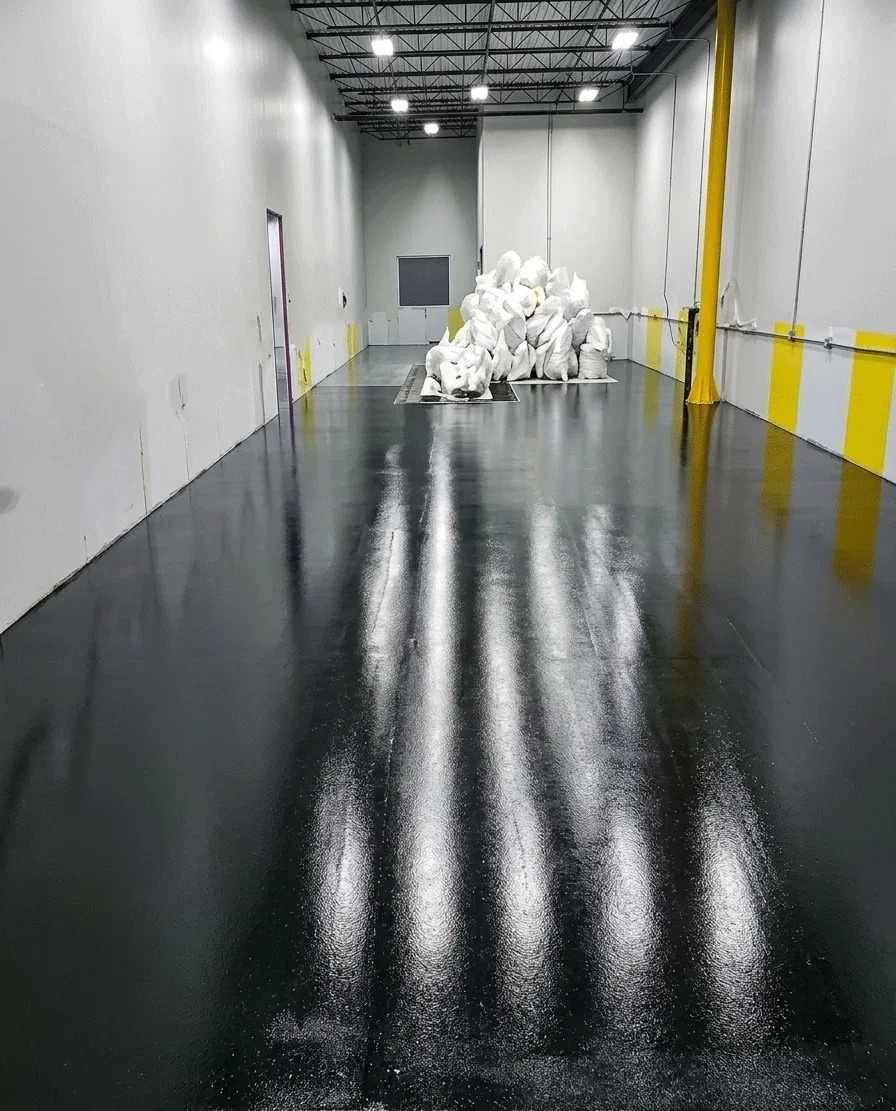
Epoxy Flooring
Epoxy flooring is used because it is strong, durable, and easy to maintain, especially in industrial and commercial areas.
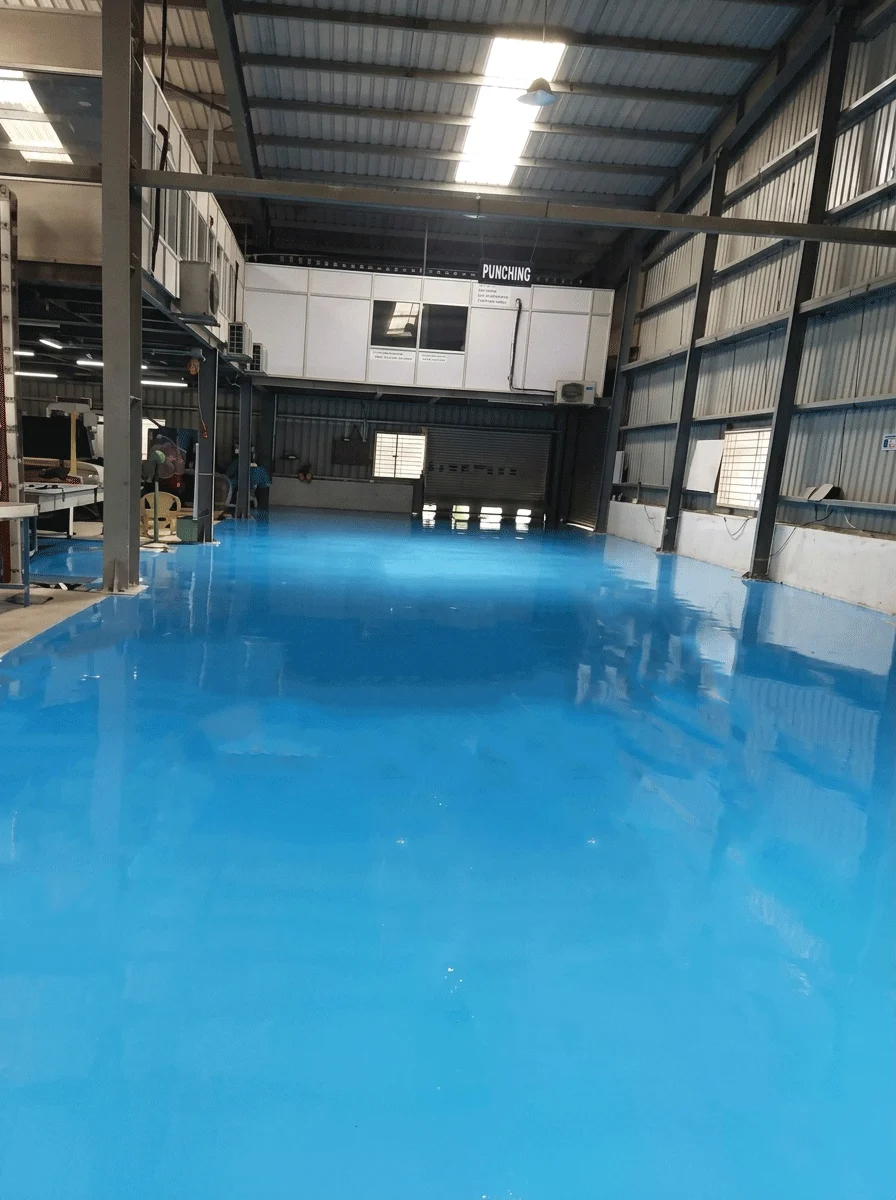
Main reasons for Epoxy flooring

High strength & durability
Epoxy creates a hard surface that can withstand heavy loads, forklifts, and machinery.

Chemical resistance
It resists oils, acids, alkalis, solvents, and chemicals – ideal for factories and workshops.

Easy to clean & maintain
Smooth, joint-free surface prevents dust accumulation and makes cleaning simple.

Dust-free surface
Seals concrete pores and stops concrete dusting.
Common Application
- Factories & warehouses
- Parking areas
- Hospitals & laboratories
- Commercial kitchens
- Showrooms
Key Reasons to Use PU Flooring
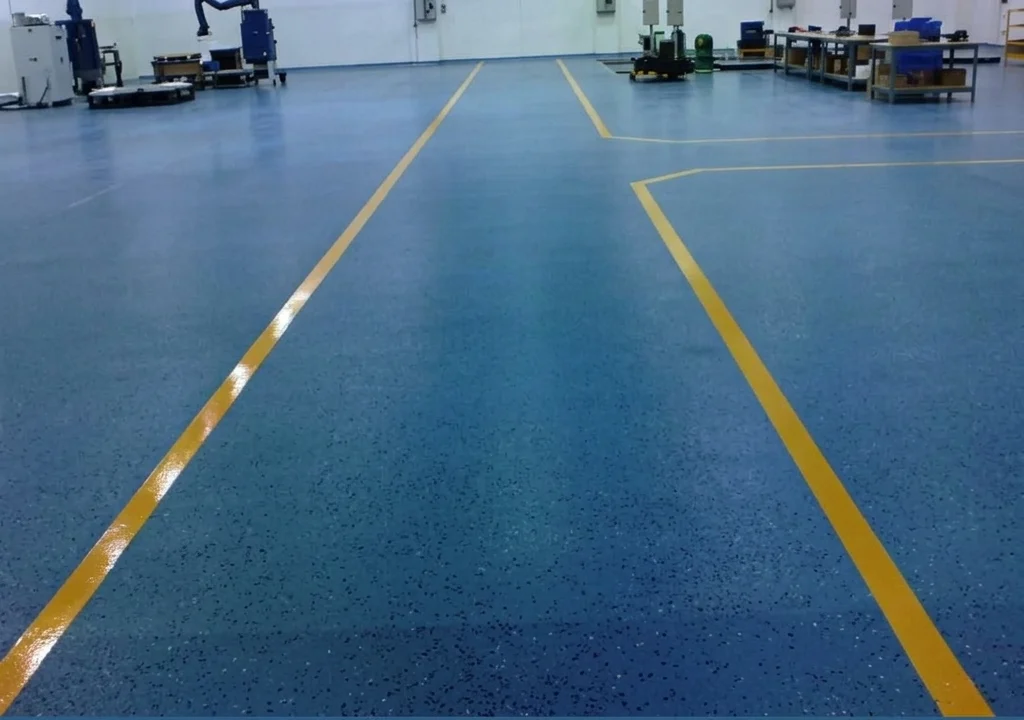
High Chemical Resistance
Resists acids, alkalis, oils, solvents, and chemicals Ideal for factories, laboratories, food & pharma industries

Thermal Resistance
Can withstand high temperatures and thermal shock Suitable for hot water wash areas, kitchens, dairies, and breweries

Flexible & Crack Resistant
PU flooring is more elastic than epoxy Absorbs vibration and prevents cracking

Heavy Duty Strength
Excellent load-bearing capacity Best for areas with forklifts, trolleys, and heavy machinery
Common Application
- Food processing plants
- Pharmaceutical industries
- Commercial kitchens Cold storage & freezers4
- Industrial manufacturing units
PU (Polyurethane) Flooring
PU (Polyurethane) Flooring System – Why it is used PU flooring is chosen mainly for industrial and commercial areas because of its strong performance and durability
Cementitious Flooring
Cementitious flooring is widely used in industrial and commercial areas because it is strong, durable, and cost-effective.
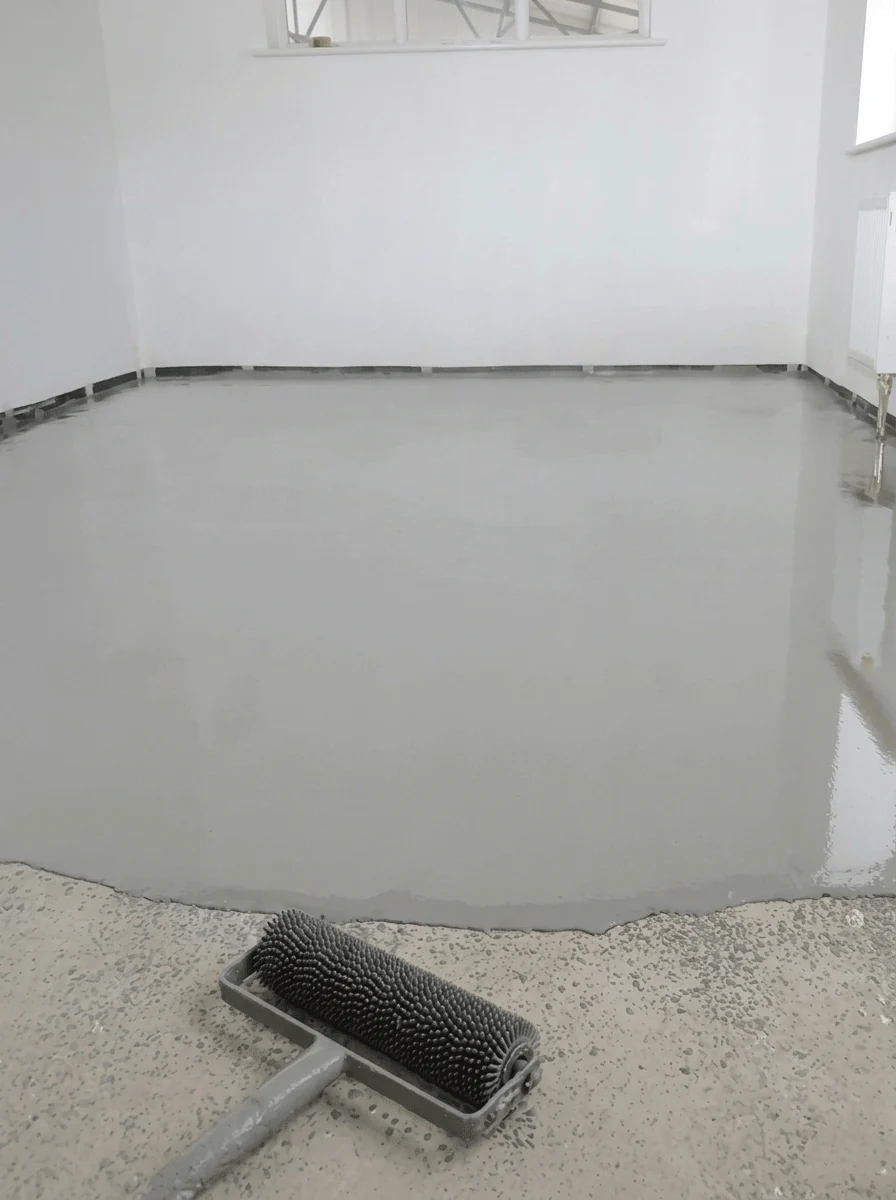
Main Reasons For Cementitious Flooring

High Strength & Durability
Excellent compressive strength Suitable for heavy loads, machines, and forklift movement
Good Thermal Resistance
Handles temperature changes better than epoxy Ideal for hot water wash and steam-cleaned areas

Breathable System
Allows moisture vapor to escape Prevents blistering and debonding on damp concrete
Good Chemical Resistance
Resistant to mild acids, alkalis, oils, and chemicals Suitable for industrial environments
Typical Applications
- Food processing units
- Dairies & breweries
- Commercial
- kitchens, Warehouses
- Industrial production areas
Key Reasons for Polished Concrete Flooring
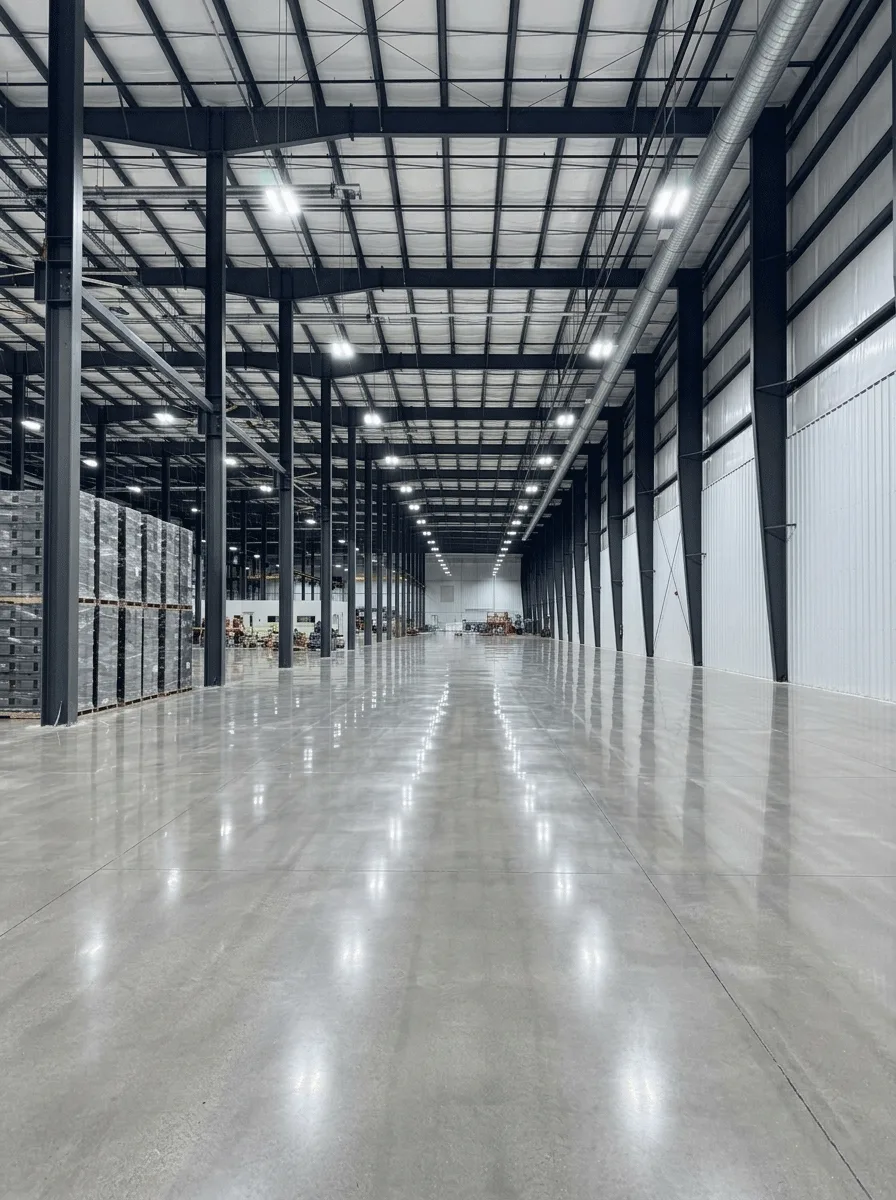
High Durability & Strength
Uses existing concrete surface Withstands heavy foot traffic and equipment

Low Maintenance
No coating required Easy cleaning with minimum chemicals
Cost Effective (Long Term)
No need for epoxy or PU coating Long life and reduced maintenance cost

Attractive Finish
Glossy, mirror-like surface Modern and premium look
Common Application
- Warehouses & factories
- Shopping malls & showrooms
- Offices & IT parks
- Interior works,uneven floors
- Parking areas,Airports & public buildings
- underlayment vinyl flooring
Polished Concrete Flooring
Polished concrete flooring is preferred for commercial, industrial, and modern interior spaces because it is durable, low-maintenance, and visually attractive.
Anti-Static / ESD Flooring
Epoxy Anti-Static / ESD Flooring is used to control and safely dissipate static electricity, which is critical in many sensitive environments
Why epoxy ESD flooring is important ?

Electrostatic Discharge Protection
Prevents Static Electricity Build-up Controls electrostatic discharge (ESD) Safely transfers static charge to ground Prevents sudden sparks
Static Control in Sensitive Environments
Protects Sensitive Equipment Essential for electronics manufacturing Prevents damage to PCBs, chips, servers, and instruments Increases equipment life and reliability
Improves Safety
Avoids sparks that can cause fire or explosion Important in chemical plants, pharma units, battery rooms Reduces shock risk to workers
Equipment Protection, and Product Quality
Ensures Product Quality Prevents dust attraction caused by static Maintains cleanroom standards Improves yield in precision manufacturing
Common Application
- Data centers & server rooms
- Pharmaceutical cleanrooms
- Explosive or hazardous areas
- R&D laboratories
- Electronics & semiconductor plants
Why car parking flooring is done?
Heavy Load & Wear Resistance
Car parking areas face constant vehicle movement, tyre friction, and heavy loads. Proper flooring prevents surface damage, cracks, and dust formation.
Oil, Fuel & Chemical Resistance
Vehicles leak oil, petrol, diesel, brake fluid, etc. Special parking floor coatings (like epoxy or PU) resist stains and chemical damage.
Anti-Skid Safety
Parking floors are often wet or dusty, which can cause slipping. Textured or anti-skid flooring improves vehicle grip and pedestrian safety.

Waterproofing Protection
Basement and podium parking areas are prone to water seepage. Parking flooring systems act as a protective waterproof layer, preventing corrosion of reinforcement
Common Types of Car Parking Flooring
- Epoxy flooring – economical, chemical resistant PU flooring – flexible
- PU cement / cementitious systems – heavy-duty, thermal resistant
- Acrylic coatings – fast curing, economical for open parking
- crack-bridging, ideal for ramps
Car Parking Flooring
Car parking flooring is important because it protects the concrete, improves safety, and increases durability under heavy vehicle use.


Sports Flooring
A sports flooring system is used to provide safety, performance, and durability for players. Different sports place different stresses on the floor, so a specialized system is essential.

Main reasons for using sports flooring systems
Player safety
Shock absorption reduces impact on joints, knees, and spine Helps prevent injuries like slips, falls, and muscle strain
Anti-slip surface
Provides proper grip even during fast movements, Reduces chances of slipping due to sweat or moisture

Better sports performance
Controlled ball bounce and movement ,Consistent surface improves speed, balance, and accuracy
Shock & impact absorption
Protects players during jumping and running , Reduces fatigue during long play sessions
Common Application
- Synthetic acrylic flooring (outdoor courts)
- PU (Polyurethane) sports flooring
Why do VDF Flooring?
High strength & load bearing
Increased compressive and flexural strength,Suitable for heavy machinery and vehicle movement
Dust-free surface
Vacuum process removes excess water,Results in dense concrete with less surface dusting
Improved abrasion resistance
Withstands continuous wear from forklifts, trolleys, and traffic,Long service life More durable than conventional concrete flooring,Reduced cracks and surface damage
Fast finishing & early usability
Floor gains strength faster,Can be used earlier compared to normal PCC flooring
Common Types of Car Parking Flooring
- Factories & warehouses
- Industrial sheds & workshops
- Parking areas & loading bays
- Logistic centers
Limitations
- Not chemical resistant
- Limited decorative appearance
- Not fully waterproof
Vacuum Dewatered Flooring
VDF flooring (Vacuum Dewatered Flooring) is used to achieve high-strength, dust-free, and durable concrete floors, especially for industrial and commercial areas
